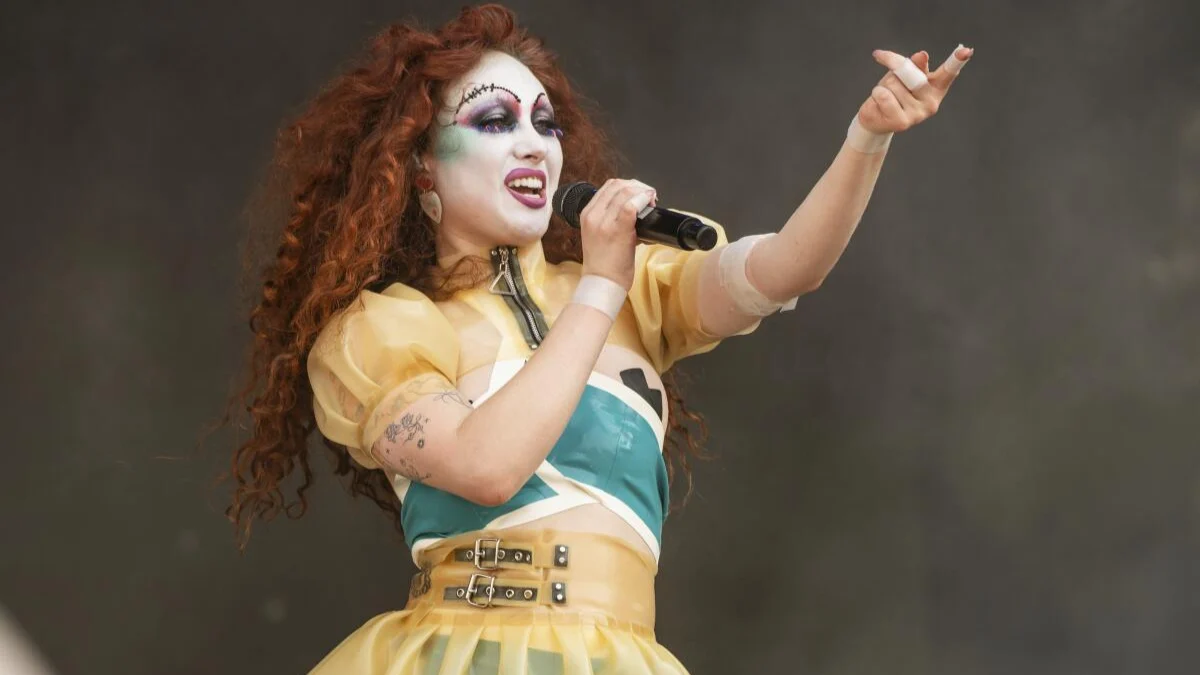
She was a teenager from a small Missouri town who uploaded songs to YouTube, got signed to a major label, and was dropped before most people even knew her name. Then she worked at a donut shop. Then she played Coachella to a crowd so massive it stopped the internet. And then she won a Grammy and used the moment not to thank a label executive, but to demand the entire music industry do better.
The Chappell Roan rise to fame story is one of the most compelling in modern pop history. Not because it happened fast, but because it almost didn’t happen at all. It took a decade, a drag queen in London, a publishing deal from a couch in Los Angeles, and one slow-burning album that nobody saw coming.
Here is every chapter of that story, told the way it deserves to be.
Before the Glitter: Kayleigh Amstutz and the YouTube Years
Before she was Chappell Roan, she was Kayleigh Rose Amstutz, growing up in Willard, Missouri, population just over five thousand. She started uploading cover songs to YouTube at around fourteen or fifteen. Conservative town, church three times a week, Christian summer camps. By her own account, she felt like she didn’t belong.
But something clicked at sixteen when she attended a summer arts program at the Interlochen Centre for the Arts in Michigan. She wrote an original song there called “Die Young” and later said the experience “changed my trajectory forever.” That song found its way to the right ears. Record labels came calling.
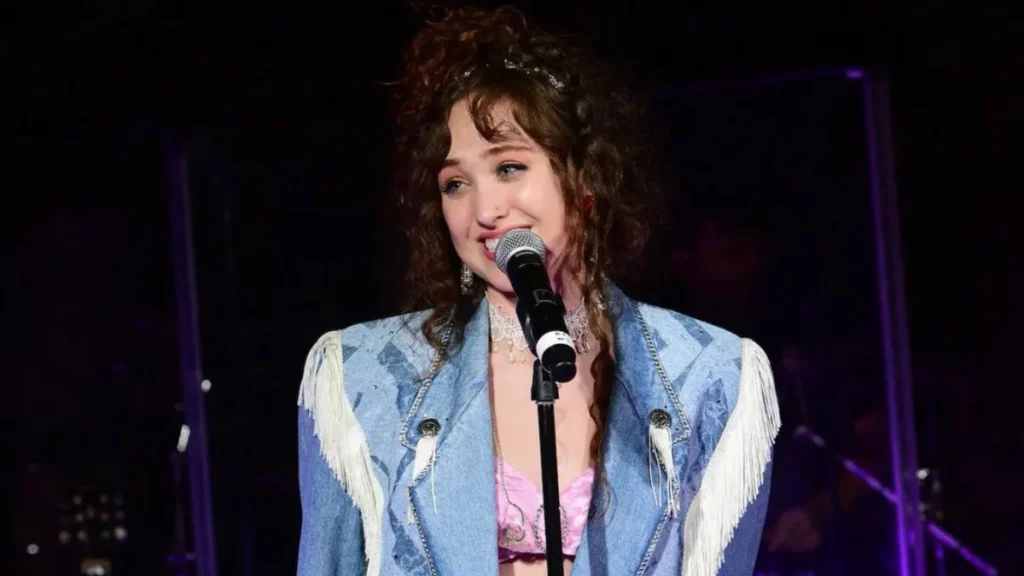
In May 2015, at seventeen years old, she signed with Atlantic Records. She named herself after her grandfather, Dennis K. Chappell, who had just passed away from brain cancer, and after his favourite song, “The Strawberry Roan” by Marty Robbins. The name Chappell Roan was never just a brand. It was a tribute. It was a promise to the one person who never asked her if she had a plan B.
When her school announced the signing over the PA system, she missed her own prom to move to Los Angeles. The music industry had called, and she answered.
School Nights, Label Pressure, and the Sound That Didn’t Fit
In September 2017, Chappell Roan released her first EP under her new name, titled “School Nights.” She was nineteen. The songs were dark, layered with teen angst, and showcased a vocal range that shifted from soulful alto to an almost haunting falsetto. Critics noticed the talent. The mainstream did not.
She later described her time at Atlantic as five years inside a “horrible, horrible record deal,” though she acknowledged she was too young at the time to know any better. The label had a commercial direction. She was still figuring out who she was as an artist. Those two things never quite aligned.
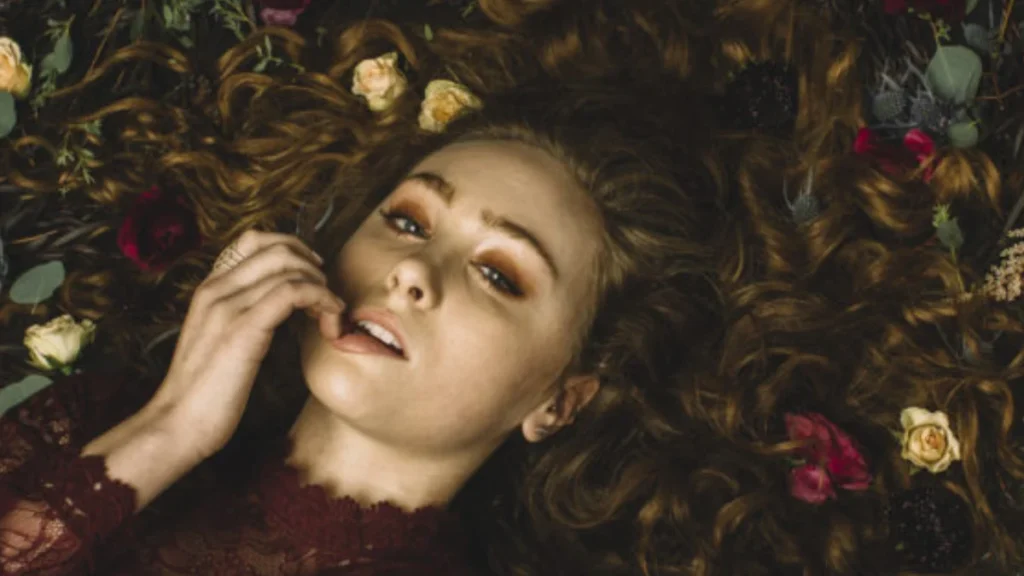
She opened for Vance Joy on tour in late 2017, then for British singer-songwriter Declan McKenna in 2018. Good experience. No real breakthrough. During this period, she began working with music producer Dan Nigro, a collaboration that would eventually change everything. But in 2020, the bottom fell out.
In April of that year, she released “Pink Pony Club,” an aching, dance-floor anthem about queer joy and choosing yourself. It was inspired by her first visit to the Abbey, a famous gay bar in Los Angeles. The label didn’t even want to release it. Then a global pandemic arrived, tours were cancelled, and without a live audience to discover the song, it sank.
By August 2020, Atlantic Records dropped her. She moved back to Willard, Missouri, and worked at a local drive-through. The girl who had signed a major label deal at seventeen was now broke, uninsured, and working in food service during a pandemic.
The Donut Shop Years: What She Built When Nobody Was Watching
This is the part of the story that most pop narratives skip over. The part where nothing is happening, and the person has to decide if they’re done or not.
Chappell Roan gave herself one year. She moved back to Los Angeles in October 2020 with barely any money and a decision to make. As she later told Paper Magazine, “I was dropped, I was working at a donut shop. No money. That’s what I was doing.” She also worked as a barista and as a production assistant, piecing together enough to survive while writing independently.
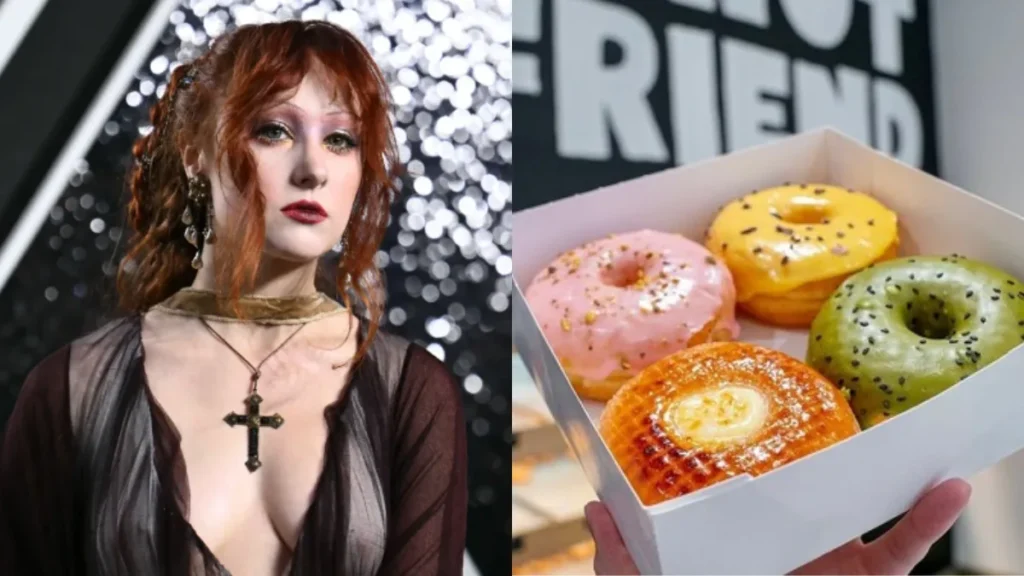
She reconnected with Dan Nigro and started rebuilding from the ground up. No label. No infrastructure. Just songs. In 2022, she secured a publishing deal with Sony, which gave her something to work with. Then came the track that changed her trajectory for the second time: “Naked in Manhattan.” It was rawer, more personal, more alive than anything she’d released under Atlantic. Listeners who found it felt like they’d discovered something real.
She also signed with Nigro’s imprint, Amusement Records, through Island Records. For the first time in her career, she was working with people who understood her creative vision. The groundwork for what came next was being quietly, determinedly laid.
How Olivia Rodrigo’s Tour Changed Everything
In May 2022, Chappell Roan opened for Olivia Rodrigo on the SOUR Tour. Then, in October 2022, she opened for Fletcher on the Girl of My Dreams tour. These weren’t headline slots. But they put her in front of audiences that were exactly her people.
In February 2023, she launched her first headline tour, Naked in North America. Every date sold out. The shows featured elaborate costumes, theatrical glitter makeup, and local drag queens performing as opening acts. It was already unmistakably her.
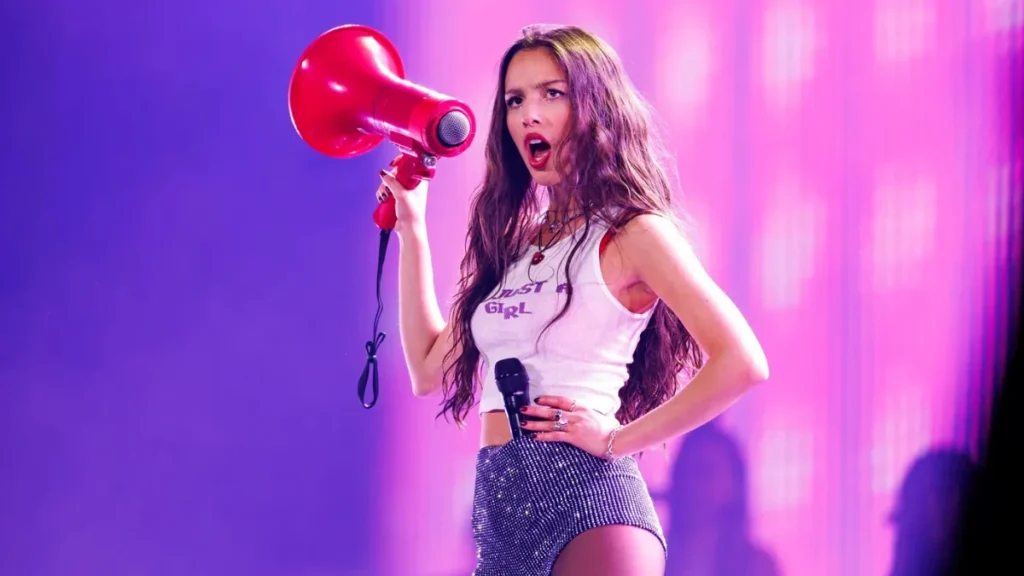
Then, in June 2023, before a show in London, something defining happened. A drag performer named Crayola, who was opening for her, watched Roan do her signature makeup and said, simply, “Honey, you are a drag queen.” The moment landed like a revelation. She has spoken about it multiple times since, describing how she fully took on drag performance as an identity. “It’s been very freeing to be like, ‘Oh, Chappell Roan is my drag project,'” she told journalist Tom Power. From that point forward, every show was a full transformation. Not just a concert. A spectacle.
Later in 2023, she opened for Olivia Rodrigo again, this time on the much larger Guts World Tour, and the audiences got even bigger.
The Album Nobody Knew Would Be Massive Until It Was
On September 22, 2023, Chappell Roan released her debut full-length album, “The Rise and Fall of a Midwest Princess.” It was not an overnight sensation. The album made its Billboard 200 debut at No. 127. It took twelve weeks to climb into the top ten, which Billboard noted was the slowest climb to the top ten for a non-catalogue album that year.
But it kept climbing. Track by track, TikTok moment by TikTok moment, the album built a loyal audience. “Hot to Go!” came with a viral dance that she invited fans to learn and perform with her at shows. “Red Wine Supernova” circulated for its sharp, playful lyricism. And “Pink Pony Club,” the song Atlantic hadn’t wanted to release back in 2020, finally found the audience it was always meant for.
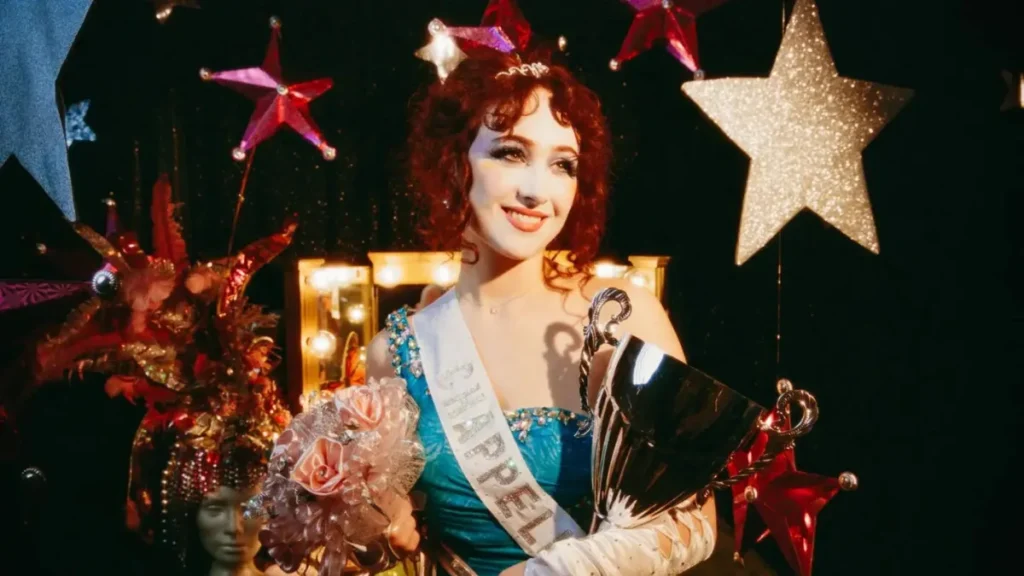
The album was eventually described by concert critic Jem Aswad in Variety as the kind of show where “you recognise when a new-ish artist’s career is about to blast off,” drawing comparisons to Lorde in 2013 and Billie Eilish in 2019. The slow burn was building toward something.
“Good Luck, Babe!” and the Moment the Algorithm Finally Agreed
On April 5, 2024, Chappell Roan released “Good Luck, Babe!” as a standalone single. It debuted at No. 77 on the Billboard Hot 100 with 6.6 million streams in its first week. That was her first-ever Hot 100 entry. Seven years after her first EP.
The song is a maximalist 1980s-influenced power ballad built around synth-pop, new wave, and baroque pop. Its subject matter is equally powerful: a story about a woman who cannot commit to her own queerness and the emotional cost of watching that happen. It is not subtle. That was the point.
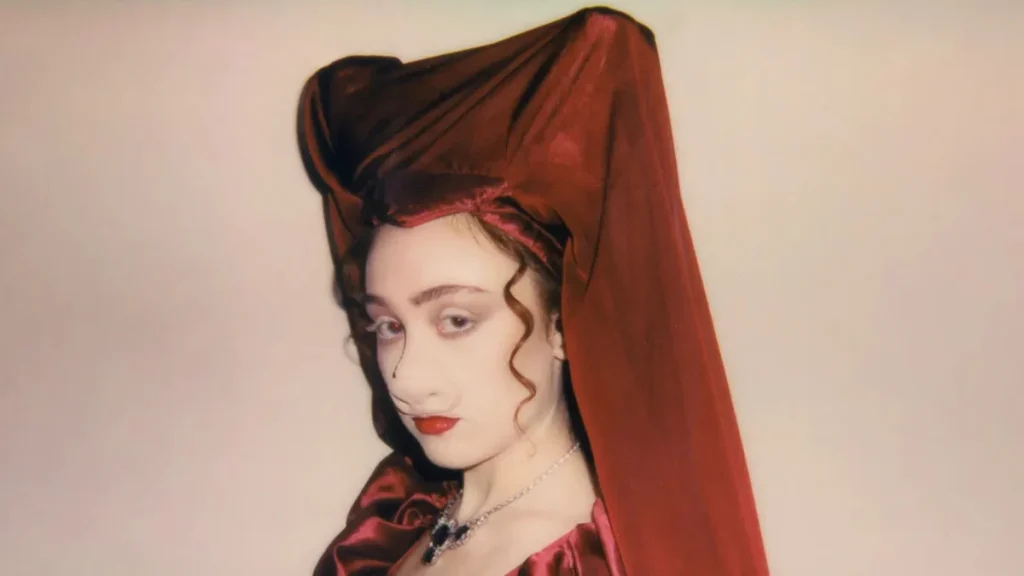
Critics placed the song at No. 1 on their best-of-2024 lists across NME, The Guardian, and Rolling Stone. By September 2024, it had climbed to No. 4 on the Hot 100. It hit No. 1 in Ireland, reached No. 2 in the United Kingdom, and on November 29, 2024, became Roan’s first song to reach one billion streams on Spotify.
Her Coachella performance in April 2024 accelerated everything. Videos from the set spread across the internet almost instantly. She arrived onstage in an ’80s-inspired outfit with crimped hair, leopard tights, and a tank top reading “Eat Me.” She brought the crowd to a standstill. Then she told the audience, “I’m your favourite artist’s favourite artist,” borrowing the energy from drag icon Sasha Colby and making it entirely her own.
From Club Shows to Sold-Out Stadiums in Eight Months
The festival run that followed was historic by any measure. At Governors Ball in June 2024, she performed in full Statue of Liberty drag, covering herself in green body paint. At Lollapalooza in August 2024, organisers reported a crowd of as many as 110,000 people for her set, potentially the largest in the festival’s history.
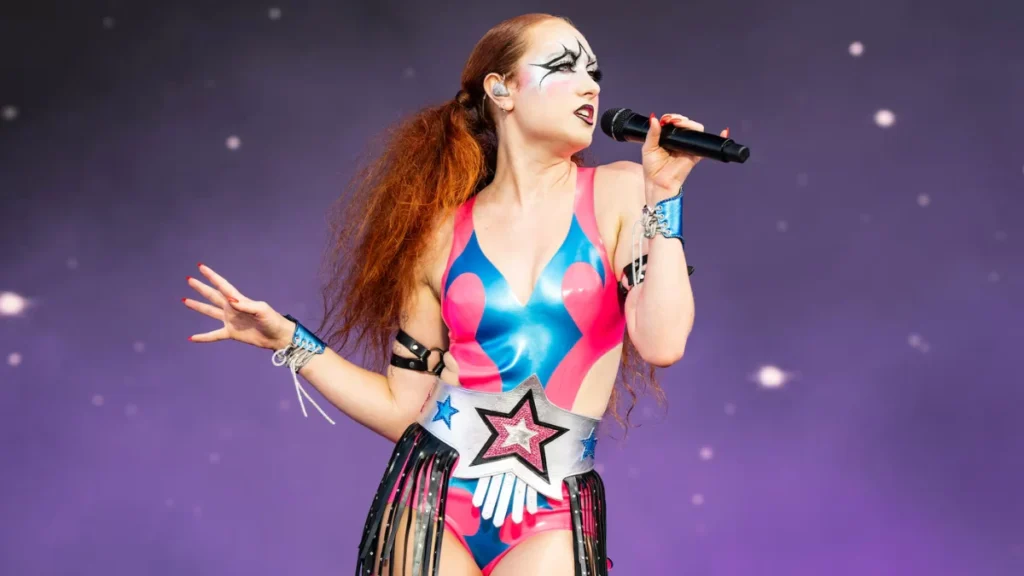
Billboard named her Top New Artist of 2024. She finished the year at No. 11 on Billboard’s overall Top Artists chart and No. 5 on Top Artists Female. She had logged seven entries on the Hot 100, including her first top-ten hit. She hosted Saturday Night Live in November 2024.
It was not a slow burn anymore. It was a wildfire.
The Grammy That Validated Everything She Sacrificed
On February 2, 2025, at the 67th Annual Grammy Awards at Crypto.com Arena in Los Angeles, Chappell Roan won Best New Artist. She performed “Pink Pony Club” onstage before the award, flanked by rodeo clowns and wearing bedazzled cowboy boots. The crowd sang along to the song Atlantic Records hadn’t wanted to release five years earlier.
Then she brought a notebook to the podium.
She had prepared what she wanted to say in the event she ever reached this moment. She told the room that she had signed as a minor, that when she was dropped, she had zero job experience, and that during the pandemic, she could not afford health insurance. She called on labels to offer developing artists a livable wage and healthcare coverage. She asked the audience of music’s most powerful people directly: “Labels, we got you, but do you got us?”
The speech sparked a national conversation. Industry executives pushed back on the technicalities. Advocates said she had shone a light on a broken system. The Recording Academy’s own affiliated union, SAG-AFTRA, said it hoped the speech would help raise awareness of existing resources. Whether or not every demand was immediately actionable, nobody in that arena could say the problem wasn’t real.
The win was not just symbolic. It confirmed what two years of slow-burning data had already suggested: this was not a moment. This was a career.
She had spent a decade writing songs from Willard, Missouri, to a donut shop counter to a sold-out Coachella stage to a Grammy podium. She did it on her own terms, with glitter on her face and a notebook in her hand.
And the music industry, for once, had to listen.